" transform="translate(2.667 2.667)" width="10.665965142141047px"/></g></svg>)
The Riperian Territoriality
Water commons along forgotten stream
The design develops a systematic approach for planting urban forest trails from the metro station plaza to the river, with management strategies that improve the physical and ecological conditions of degraded urban streams, address irrigation needs, and enhance storm water management.
A forest in a city... how could that be?
The project aggregates all community vegetation and green spaces to deliver diverse environmental, health, and economic benefits. It becomes a key asset at both regional hydrological and local ecological levels.
Urban Forest analysis reveals a rich but threatened riparian landscape with strong potential to inspire new research and public engagement.
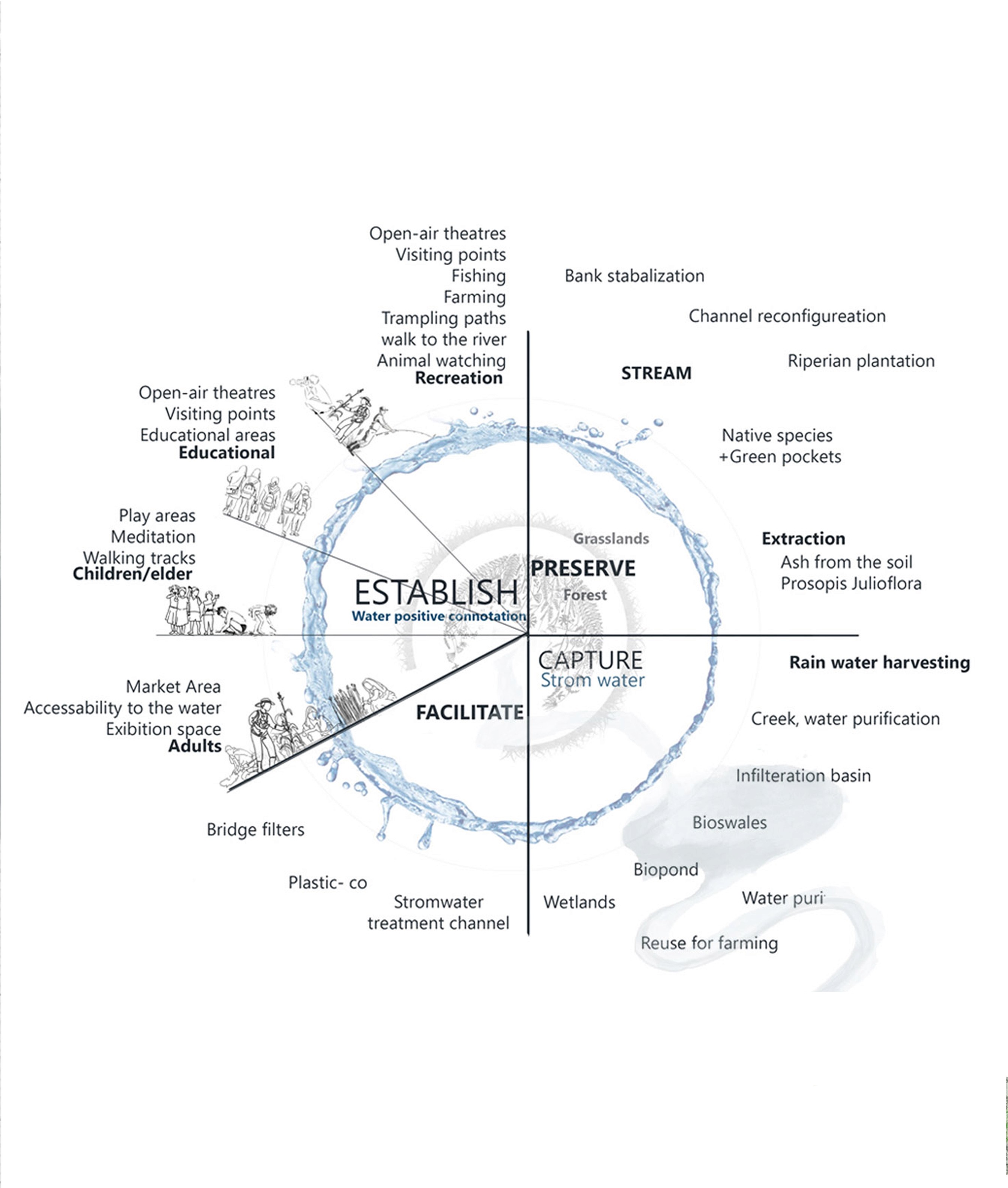
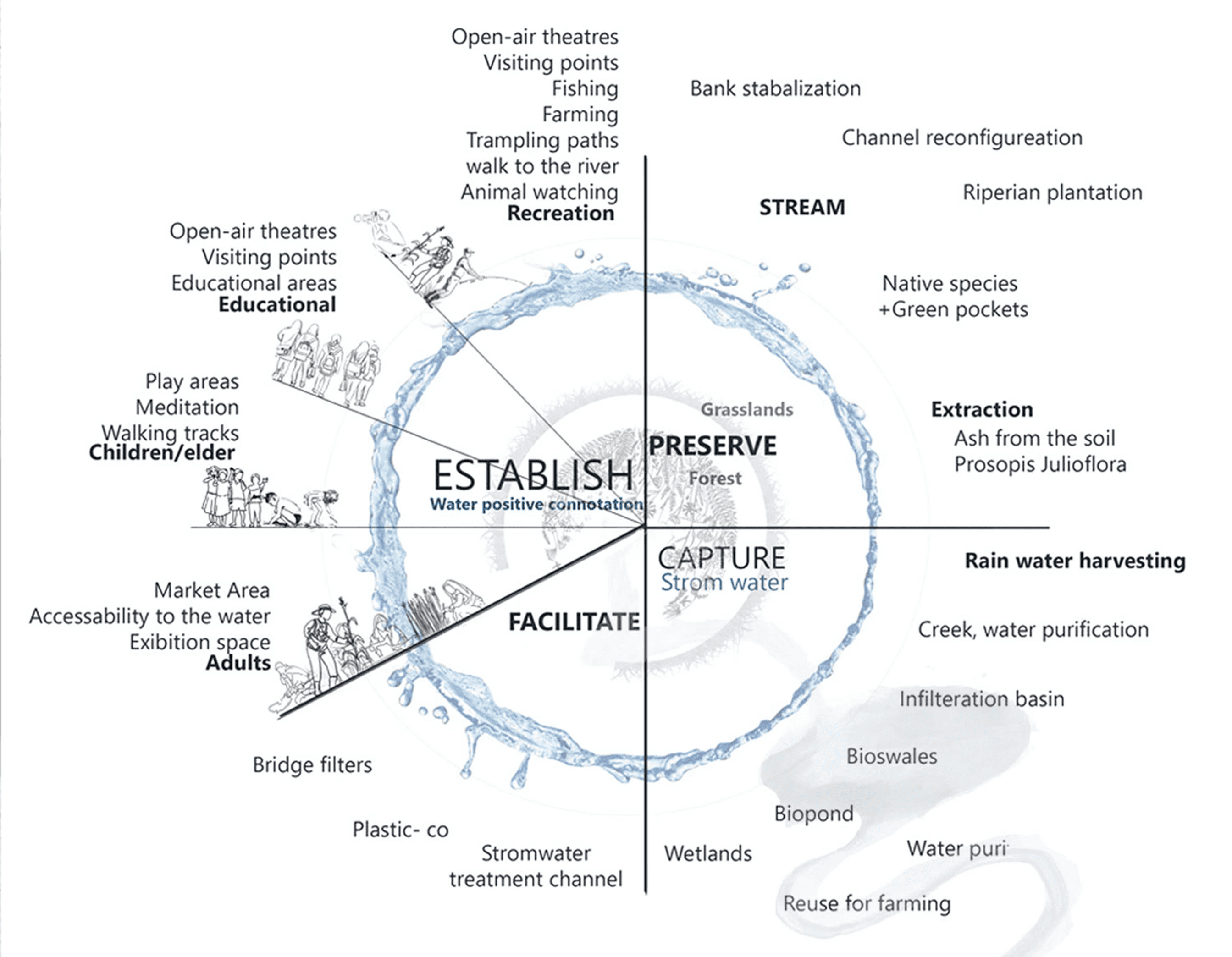
The aim is to preserve the urban village by making it self-sufficient through a closed-loop water cycle-focusing on extraction, collection, replenishment, cleansing, and distribution.
The Riperian Territoriality
Water commons along forgotten stream
The project tries to weave lost associations using collective memories using spacial inserts.
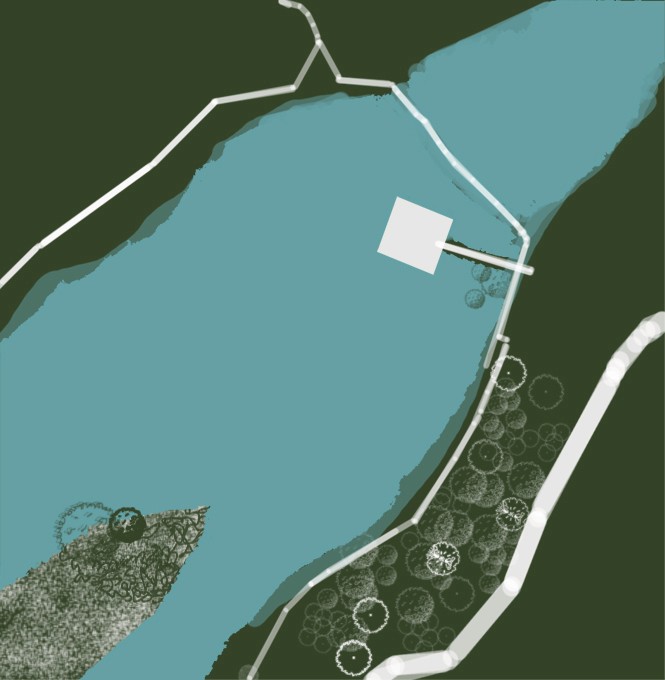
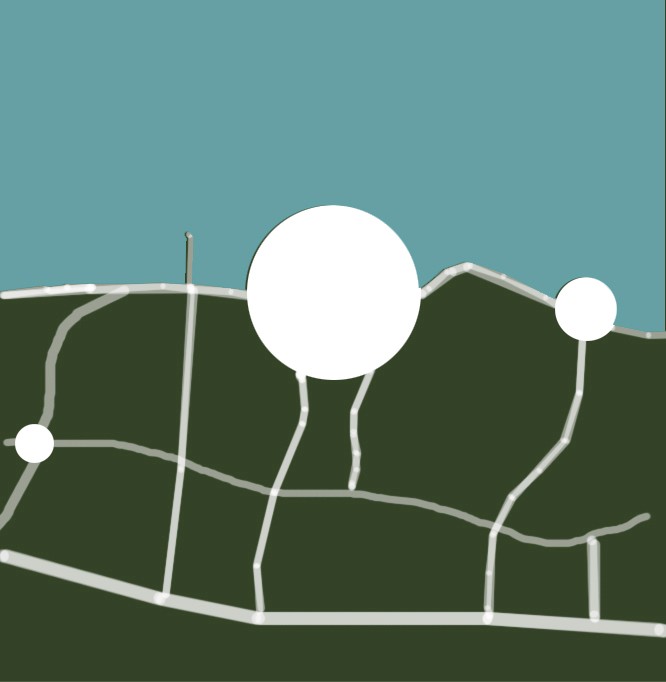
The Design carefully knots together the memories and their associated elements from culture and landscape to the existing coastal edge in a sensitive manner. It explores the native edge of dunes, beaches, and settlements as a series of small spatial inserts. These inserts range from a place for a community gathering near the existing community kitchen to small play structures inspired by fish drawing and net structures to a more natural edge to the sand dunes. It also re-shifts and places the fish market in its previous informal organization and character.
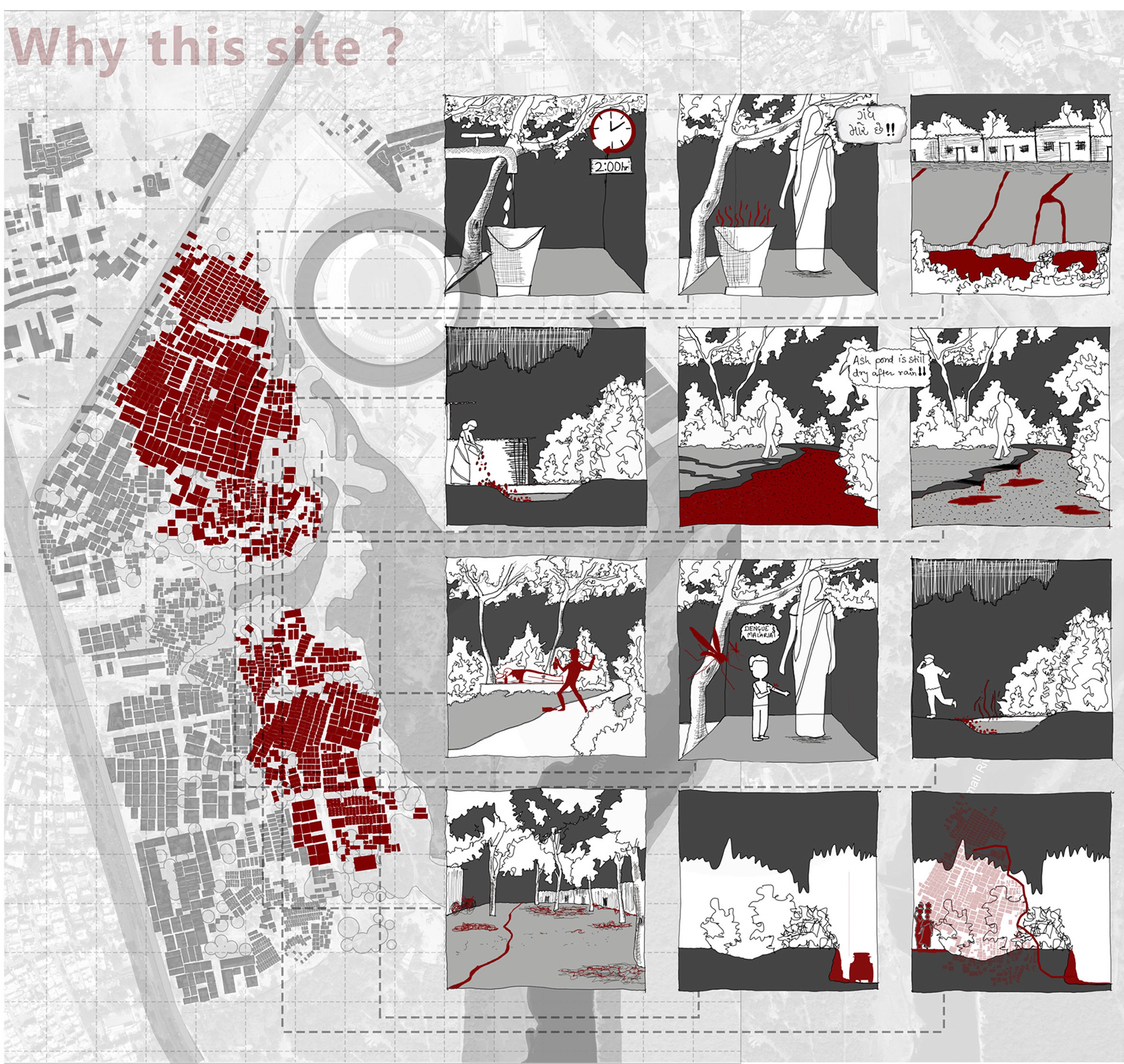
Broken Water Systems: A Crisis Beyond Scarcity
Urban communities face contaminated water, poor sanitation, ash dumping, and invasive species—affecting health, ecosystems, and overall livability.
Broken Water Systems: A Crisis Beyond Scarcity
Urban communities face contaminated water, poor sanitation, ash dumping, and invasive species—affecting health, ecosystems, and overall livability.
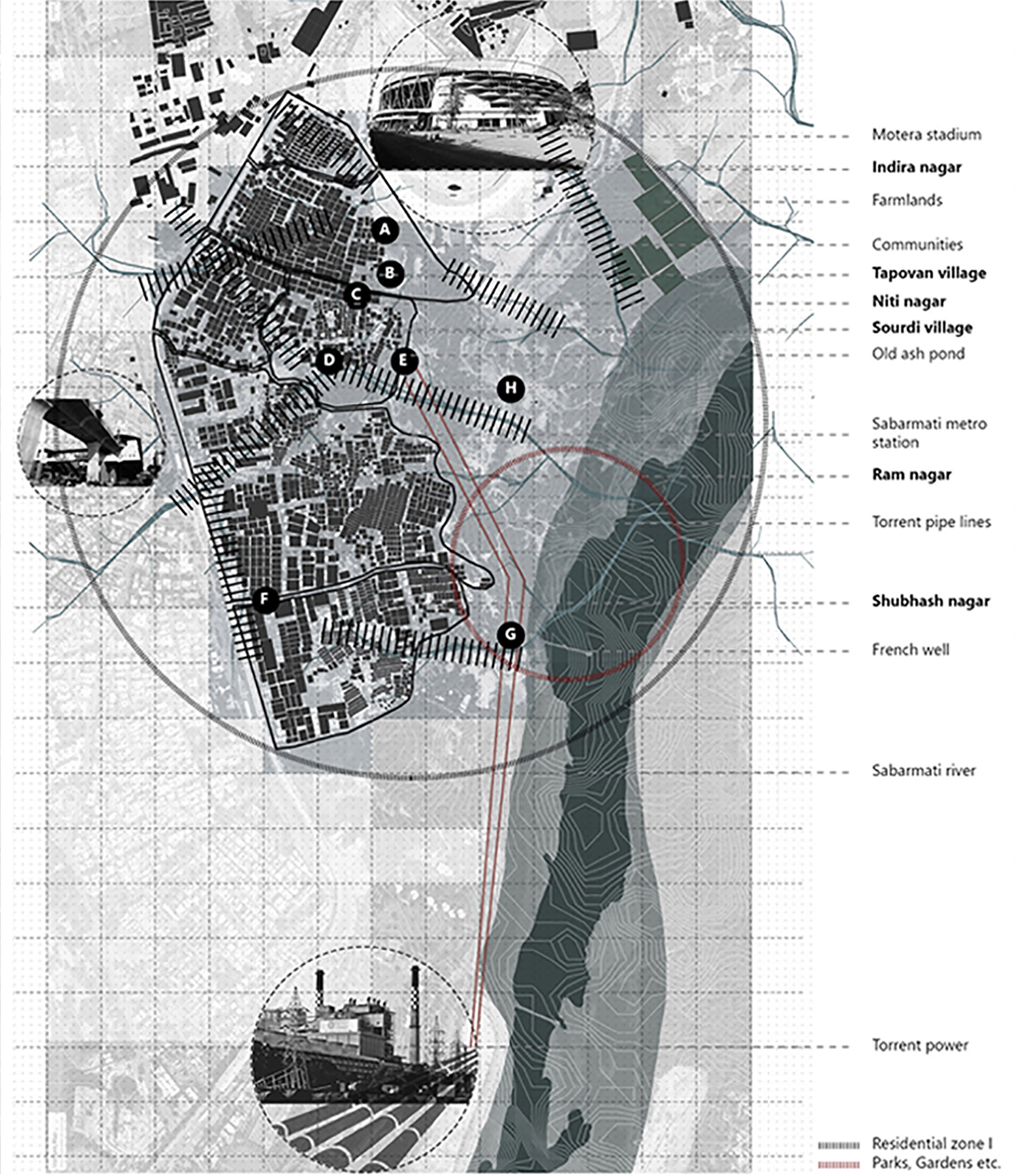
Disrupted Stream Corridors
Infrastructure and ash disposal have damaged natural streams, causing urban flooding and groundwater depletion. Urbanization continues to degrade local ecosystems.
Disrupted Stream Corridors
Infrastructure and ash disposal have damaged natural streams, causing urban flooding and groundwater depletion. Urbanization continues to degrade local ecosystems.
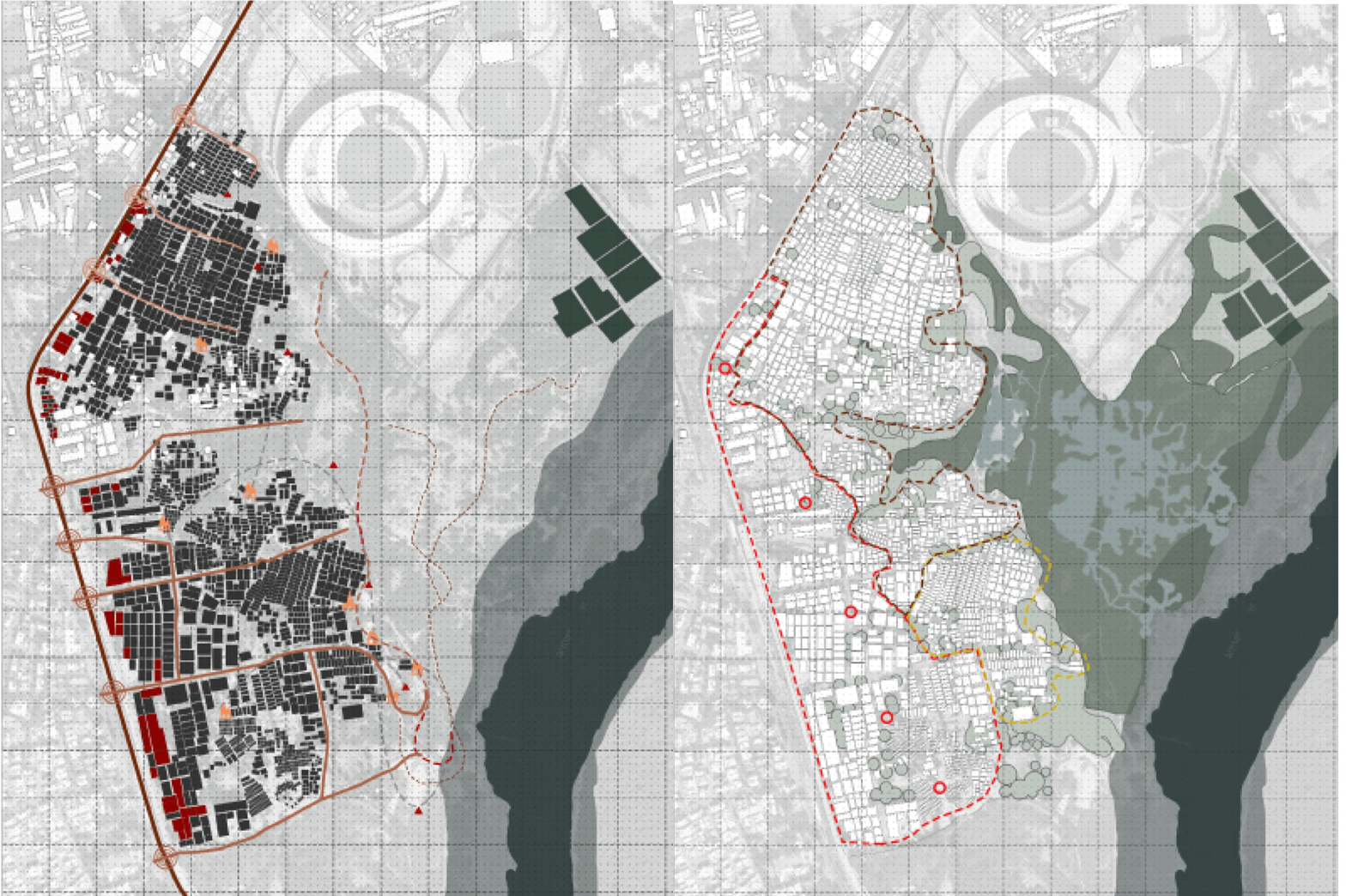
Site Analysis
Settlement, Movement, Edges, Vegetation & Water Distribution
Site Analysis
Settlement, Movement, Edges, Vegetation & Water Distribution
Forest Trails as Restoration Tools
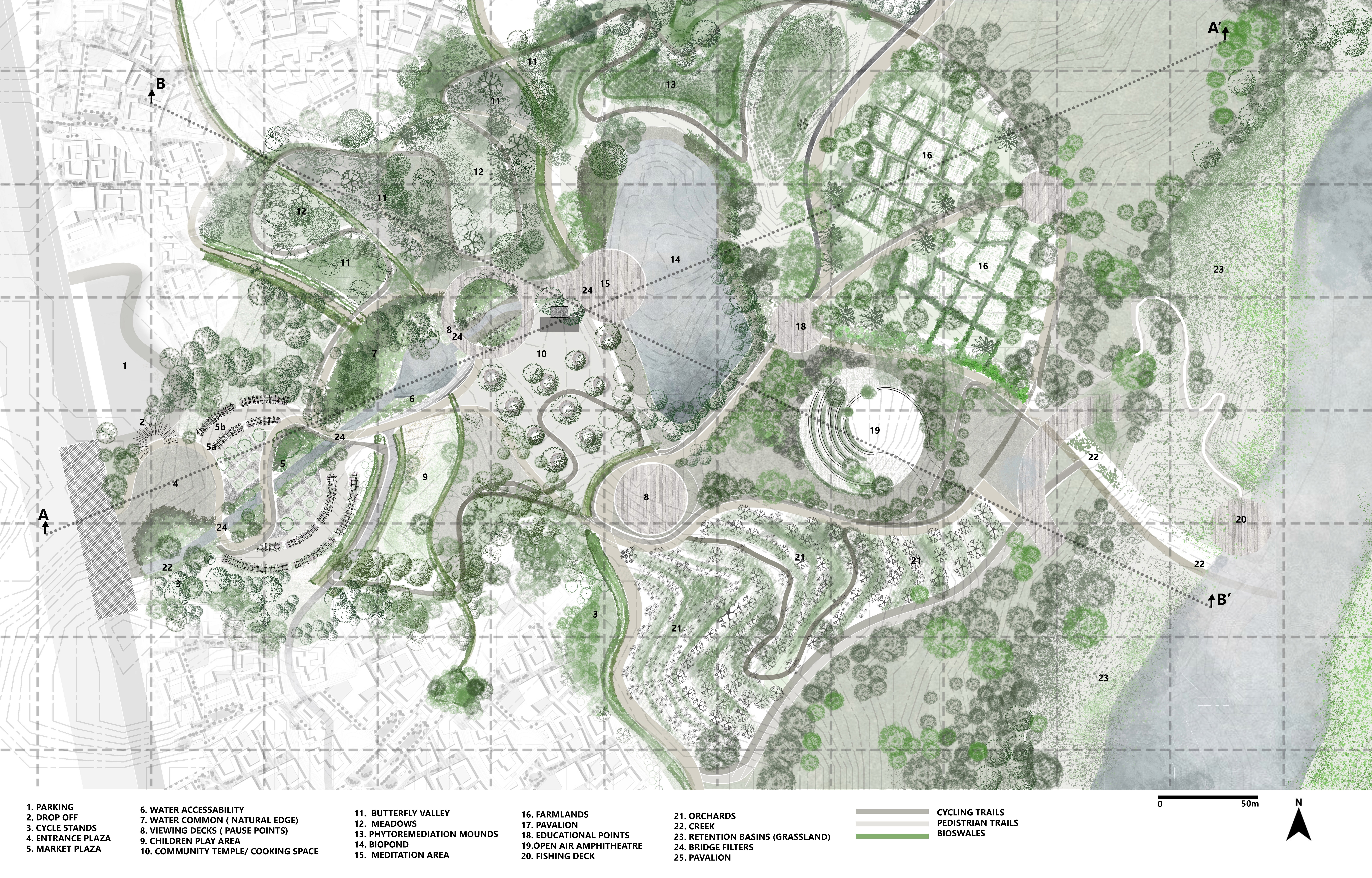
A dense urban forest trail reconnects people to nature while restoring native plant species and biodiversity. The walkway becomes a tool for public awareness and ecological participation.
Forest Trails as Restoration Tools
A dense urban forest trail reconnects people to nature while restoring native plant species and biodiversity. The walkway becomes a tool for public awareness and ecological participation.
Stream-Based Green Infrastructure
Sub-streams are designed as bioswales, capturing stormwater and channeling it into the main stream. An ash pond is converted into a functional biopond with phytoremediation planting. Water commons, orchards, and farmlands celebrate water and restore ecological health.
Water-Positive Urban Village
The design aims to make the urban village self-sufficient by closing the water loop—through extraction, collection, cleansing, replenishment, and distribution—thus promoting a complete hydrological cycle.
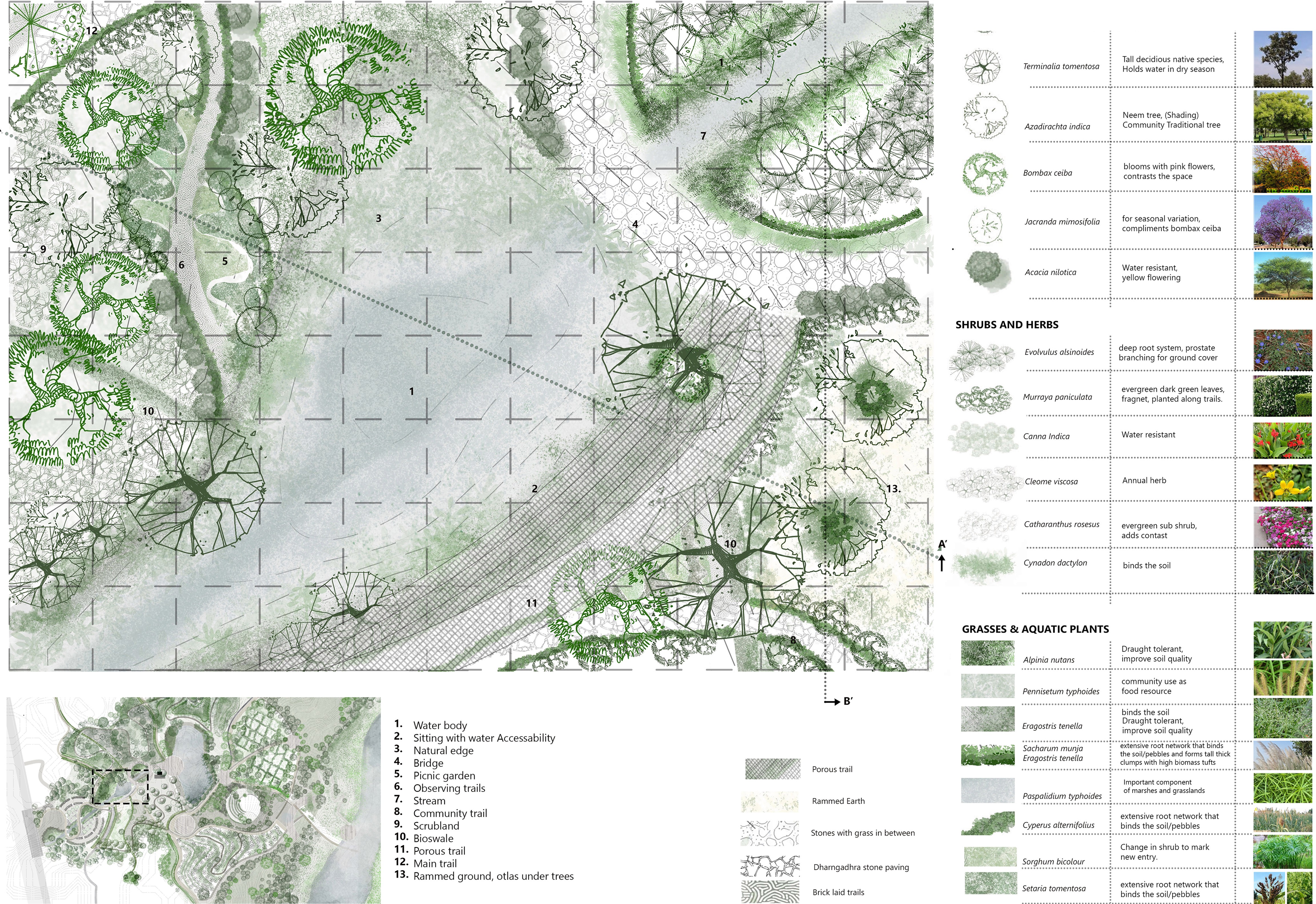
Seasonal, Adaptive Forest Spaces
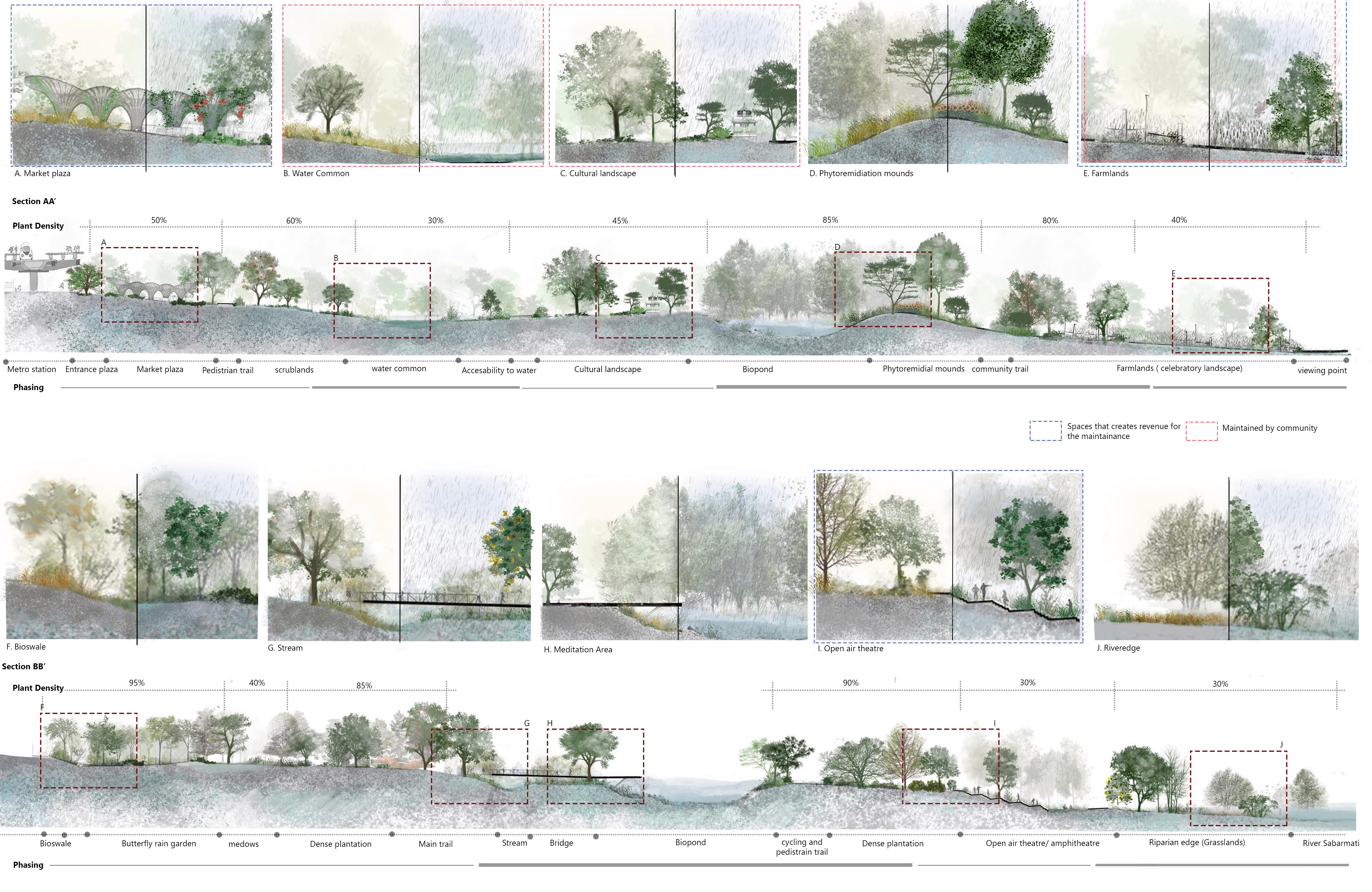
Forest-inspired community spaces are planned with fewer trees to mimic natural rooms. Tree placement is optimized for shade, moisture, and usability across seasons. Porous trails support water flow into retention ponds.
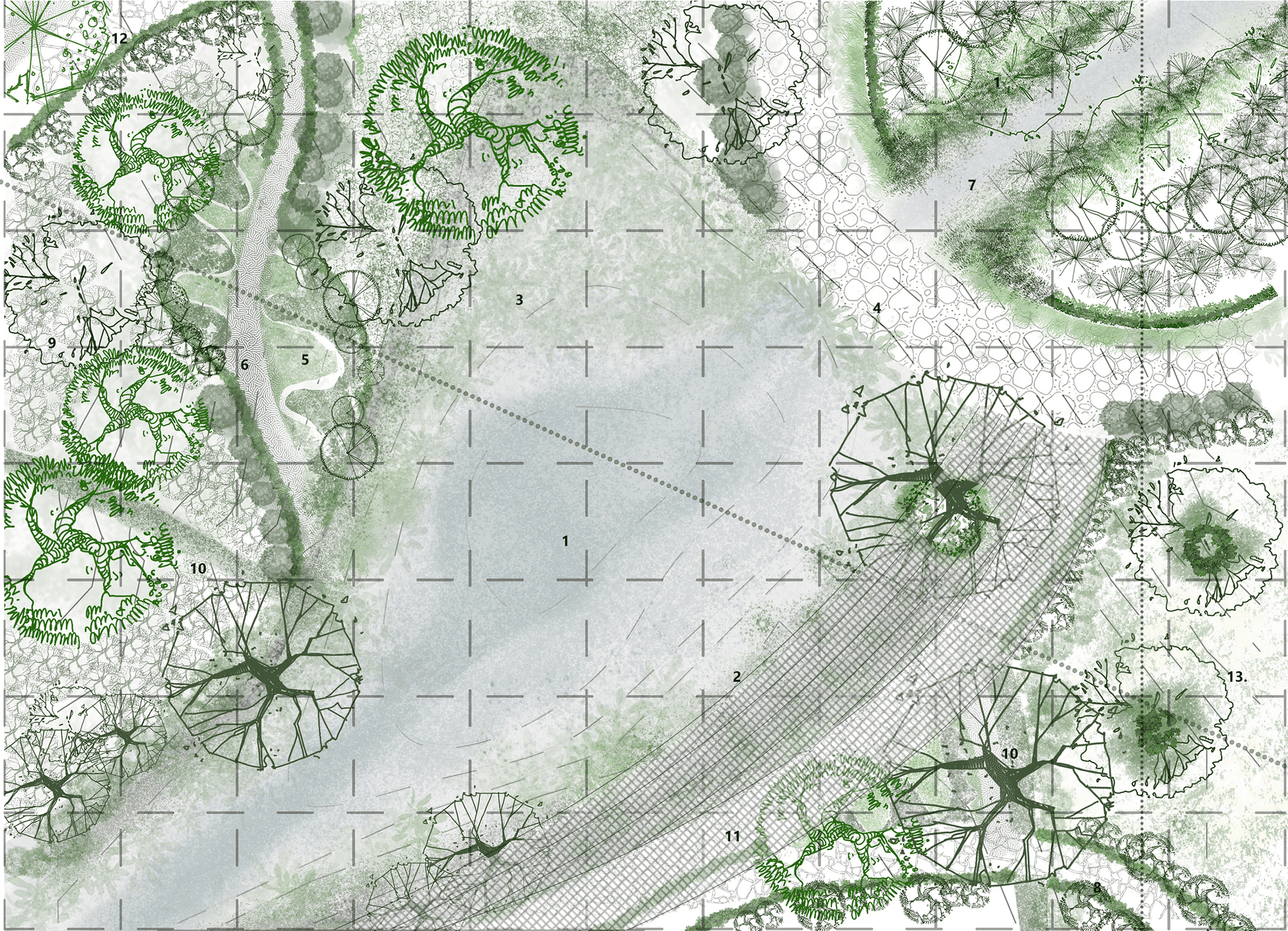
Seasonal, Adaptive Forest Spaces
Forest-inspired community spaces are planned with fewer trees to mimic natural rooms. Tree placement is optimized for shade, moisture, and usability across seasons. Porous trails support water flow into retention ponds.
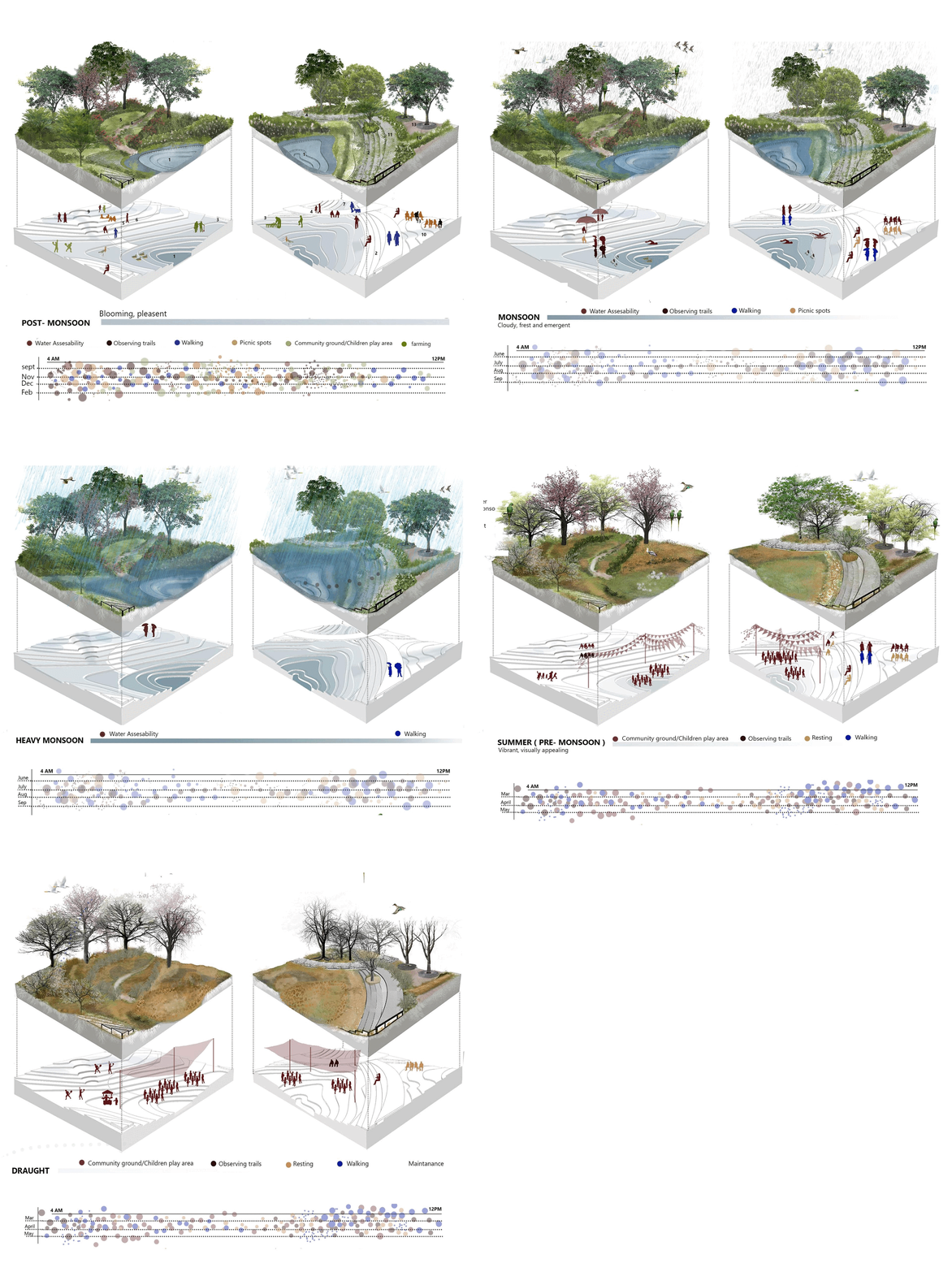
. Seasonal Use & Community Activities
In dry seasons, the space supports millet (bajra) farming for community use. It transforms during festivals and events, with planting and spatial design adapted to support varying human activity densities.
Seasonal Use & Community Activities
In dry seasons, the space supports millet (bajra) farming for community use. It transforms during festivals and events, with planting and spatial design adapted to support varying human activity densities.
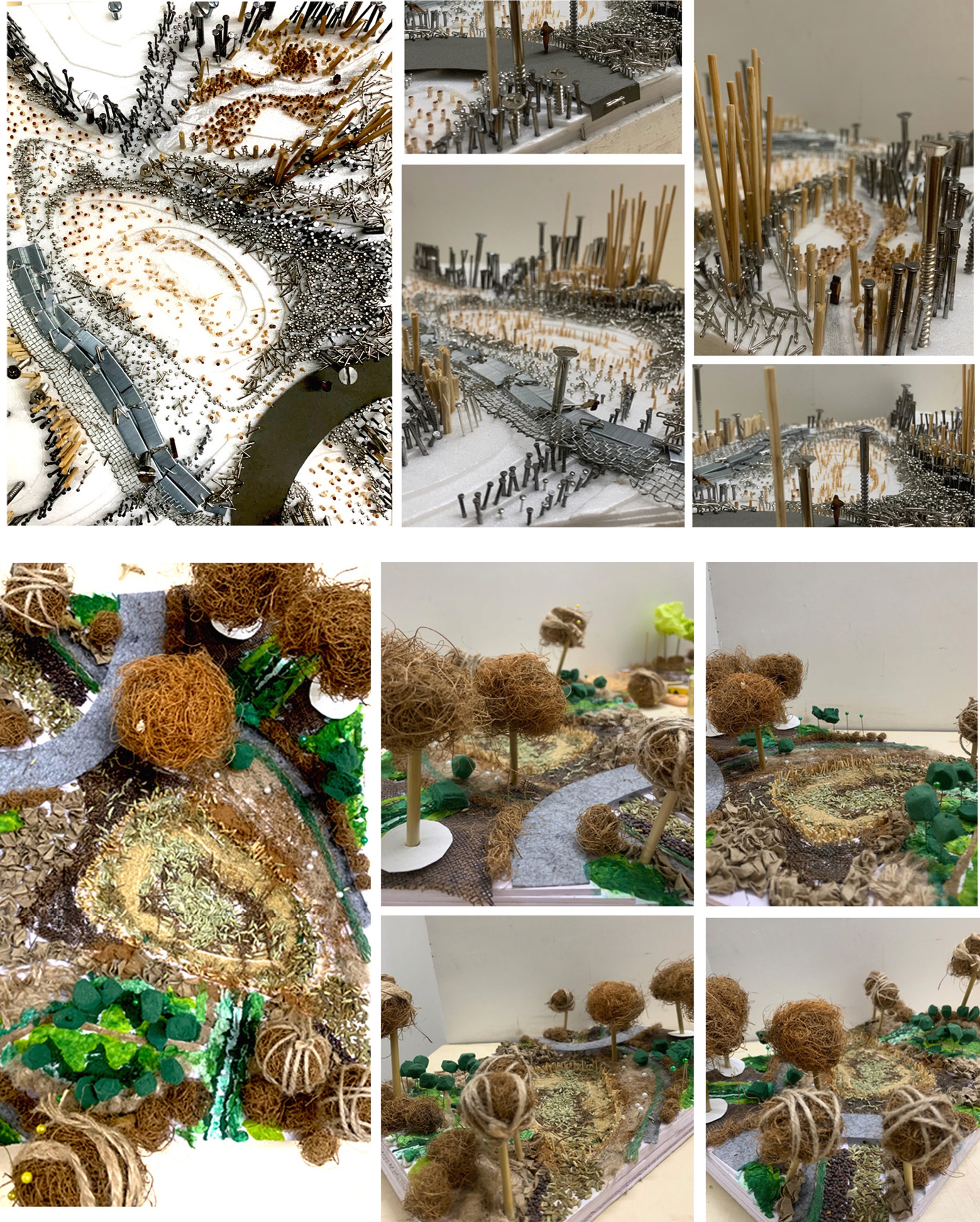
Planting Strategy & Texture Models
Planting density, texture, and spatial experience are tested through physical ensuring ecological and aesthetic coherence across seasons.
Planting Strategy & Texture Models
Planting density, texture, and spatial experience are tested through physical ensuring ecological and aesthetic coherence across seasons.
The Riperian Territoriality
Water commons along forgotten stream
The design develops a systematic approach for planting urban forest trails from the metro station plaza to the river, with management strategies that improve the physical and ecological conditions of degraded urban streams, address irrigation needs, and enhance storm water management.
A forest in a city... how could that be?
The project aggregates all community vegetation and green spaces to deliver diverse environmental, health, and economic benefits. It becomes a key asset at both regional hydrological and local ecological levels.
Urban Forest analysis reveals a rich but threatened riparian landscape with strong potential to inspire new research and public engagement.
The aim is to preserve the urban village by making it self-sufficient through a closed-loop water cycle-focusing on extraction, collection, replenishment, cleansing, and distribution.
The Riperian Territoriality
Water commons along forgotten stream
The design develops a systematic approach for planting urban forest trails from the metro station plaza to the river, with management strategies that improve the physical and ecological conditions of degraded urban streams, address irrigation needs, and enhance storm water management.
A forest in a city... how could that be?
The project aggregates all community vegetation and green spaces to deliver diverse environmental, health, and economic benefits. It becomes a key asset at both regional hydrological and local ecological levels.
Urban Forest analysis reveals a rich but threatened riparian landscape with strong potential to inspire new research and public engagement.
The aim is to preserve the urban village by making it self-sufficient through a closed-loop water cycle-focusing on extraction, collection, replenishment, cleansing, and distribution.
Broken Water Systems: A Crisis Beyond Scarcity
Urban communities face contaminated water, poor sanitation, ash dumping, and invasive species—affecting health, ecosystems, and overall livability.
Broken Water Systems: A Crisis Beyond Scarcity
Urban communities face contaminated water, poor sanitation, ash dumping, and invasive species—affecting health, ecosystems, and overall livability.
Disrupted Stream Corridors
Infrastructure and ash disposal have damaged natural streams, causing urban flooding and groundwater depletion. Urbanization continues to degrade local ecosystems.
Disrupted Stream Corridors
Infrastructure and ash disposal have damaged natural streams, causing urban flooding and groundwater depletion. Urbanization continues to degrade local ecosystems.
Site Analysis
Settlement, Movement, Edges, Vegetation & Water Distribution
Site Analysis
Settlement, Movement, Edges, Vegetation & Water Distribution
Forest Trails as Restoration Tools
A dense urban forest trail reconnects people to nature while restoring native plant species and biodiversity. The walkway becomes a tool for public awareness and ecological participation.
Forest Trails as Restoration Tools
A dense urban forest trail reconnects people to nature while restoring native plant species and biodiversity. The walkway becomes a tool for public awareness and ecological participation.
Stream-Based Green Infrastructure
Sub-streams are designed as bioswales, capturing stormwater and channeling it into the main stream. An ash pond is converted into a functional biopond with phytoremediation planting. Water commons, orchards, and farmlands celebrate water and restore ecological health.
Stream-Based Green Infrastructure
Sub-streams are designed as bioswales, capturing stormwater and channeling it into the main stream. An ash pond is converted into a functional biopond with phytoremediation planting. Water commons, orchards, and farmlands celebrate water and restore ecological health.
Water-Positive Urban Village
The design aims to make the urban village self-sufficient by closing the water loop—through extraction, collection, cleansing, replenishment, and distribution—thus promoting a complete hydrological cycle.
Water-Positive Urban Village
The design aims to make the urban village self-sufficient by closing the water loop—through extraction, collection, cleansing, replenishment, and distribution—thus promoting a complete hydrological cycle.
Seasonal, Adaptive Forest Spaces
Forest-inspired community spaces are planned with fewer trees to mimic natural rooms. Tree placement is optimized for shade, moisture, and usability across seasons. Porous trails support water flow into retention ponds.
Seasonal, Adaptive Forest Spaces
Forest-inspired community spaces are planned with fewer trees to mimic natural rooms. Tree placement is optimized for shade, moisture, and usability across seasons. Porous trails support water flow into retention ponds.
. Seasonal Use & Community Activities
In dry seasons, the space supports millet (bajra) farming for community use. It transforms during festivals and events, with planting and spatial design adapted to support varying human activity densities.
. Seasonal Use & Community Activities
In dry seasons, the space supports millet (bajra) farming for community use. It transforms during festivals and events, with planting and spatial design adapted to support varying human activity densities.
Planting Strategy & Texture Models
Planting density, texture, and spatial experience are tested through physical ensuring ecological and aesthetic coherence across seasons.
Planting Strategy & Texture Models
Planting density, texture, and spatial experience are tested through physical ensuring ecological and aesthetic coherence across seasons.
Similar Projects